
How to Get Court Records
Every request starts with the right office. The Gibson County Circuit Court Clerk keeps Circuit and Criminal files at the Justice Building. General Sessions splits between Trenton and Humboldt contacts. Chancery belongs to the Clerk and Master in either city, and Juvenile Court plus each city court run their own channels. The elected Gibson County Clerk handles licenses, titles, and county-government records, not trial-court files.
No single public search covers every Gibson County trial-court docket. Call the clerk, request supervised inspection at the right counter, or order copies. Chancery inspection can be asked for orally. Chancery copies need written Form A, sent in person, by mail, fax, or email. Delivery options include pickup, USPS, and electronic delivery. Tybera eFlex handles filing in selected courts, not record search. The state Public Case History tool only applies once an appeal reaches a Tennessee appellate court.
- Identify the court, location, case number, parties, and filing year.
- Call the correct clerk to confirm custody and current access.
- Ask whether inspection, a plain copy, or a certified copy meets the need.
- For Chancery copies, submit Form A with the document and date range.
- Choose delivery and review the clerk’s estimate before paying.
Gibson Records Have Three Layers
Three layers, three different things. A Gibson County court docket lists what happened. The pleading or order is the actual item behind a docket entry. And a certified copy is one the clerk authenticates, usually with a seal or certification. One caution: an online case-history line does not put the document image online. A printed screen is never an official certified record.
- Docket
- The dated index of filings, settings, orders, and outcomes.
- Filed document
- The complaint, petition, motion, exhibit, order, judgment, or transcript named by an entry.
- Certified copy
- A clerk-authenticated reproduction used when formal proof is required.
The Tennessee appellate-record rule shows the recipe in practice. Certified trial papers, exhibits, and a transcript or statement of evidence can together form the record on appeal.
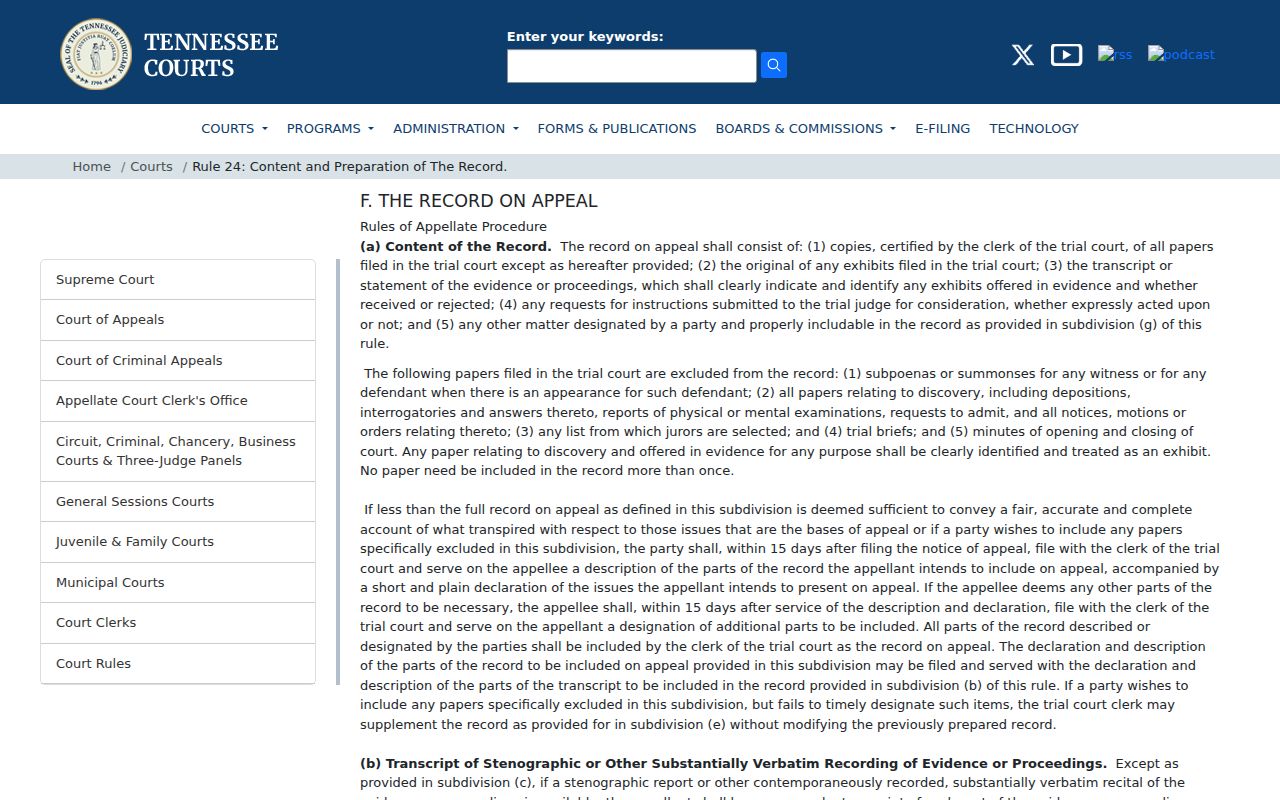
That structure makes the layers concrete. Even when certified pieces move up into an appeal, the trial clerk's file stays the source.
Types of Court Records
What sits in a Gibson County court record depends on the court. Circuit and Criminal files can hold complaints, indictments, motions, orders, judgments, and sentencing papers. General Sessions covers limited civil claims, criminal matters, traffic cases, warrants, bonds, protection orders, probation review, and possession writs. Chancery files involve estates, probate, domestic relations, property, or civil-equity disputes. Municipal files stick to city ordinances and traffic matters. Juvenile records run through a separate, restricted channel.
Ask for a named item rather than the whole file. Often a docket sheet is enough to spot the latest signed order. If not, give the clerk the entry date and the document type. The 28th District rules keep Chancery papers, tape recordings, and filed exhibits with the Clerk and Master. Protected exhibits may be withheld or redacted.
Gibson Court Records Need the Right Clerk
The office names trip people up. The official Gibson County Clerk page describes a constitutional county office, yet case files from Circuit, Criminal, General Sessions, and Chancery answer to court clerks. The source on that page marks the boundary.
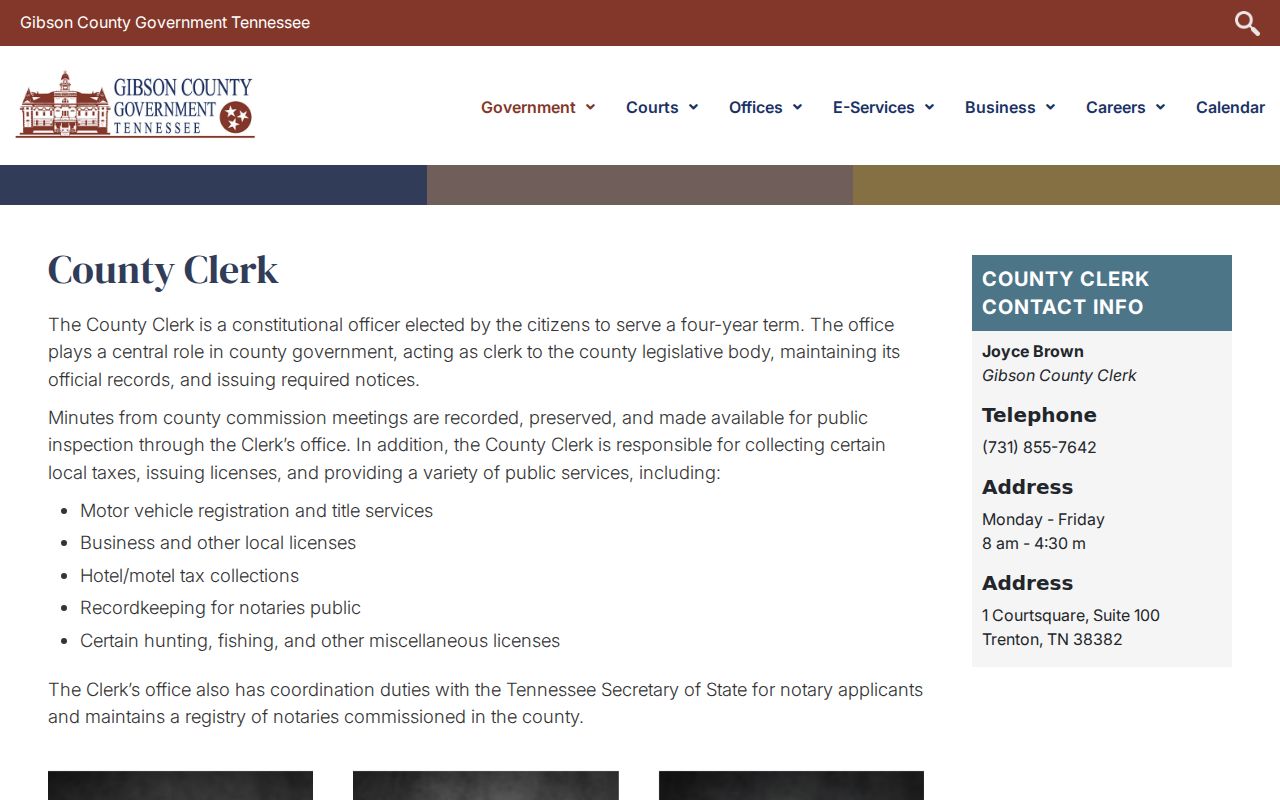
Route by court, not by default. For a lawsuit, prosecution, hearing, judgment, or Chancery matter, send the request to the trial clerk rather than the county-government clerk.
| Record | Starting custodian | Location clue |
|---|---|---|
| Circuit or Criminal | Circuit Court Clerk | Justice Building, Trenton |
| General Sessions | General Sessions clerk | Trenton or Humboldt |
| Chancery or estate | Clerk and Master | Trenton or Humboldt office |
| Juvenile | Juvenile Court administrator | Separate access rules |
| City citation | Issuing municipal clerk | Named city court |
What a Court Record Contains
A case file can hold more than its court docket shows. What you get depends on the court, the case type, and access limits. Use the docket to pinpoint the exact paper first, then ask the clerk whether it is public, redacted, or restricted.
| Case identity | Case number, court, location, filing year, and public case style. |
|---|---|
| Docket history | Dated filings, settings, continuances, signed orders, and disposition entries. |
| Pleadings | Complaints, petitions, answers, motions, and filed papers. |
| Orders | Rulings, judgments, and other signed court directions. |
| Evidence record | Filed exhibits, transcripts, or recordings when maintained and open. |
| Access treatment | Redactions, sealing limits, or a ground for withholding material. |
Discovery exchanged between the parties may never be filed. That means it may not appear in the Gibson County court record at all, and a request for all evidence can reach past what the clerk keeps.
Gibson Chancery Form A Requests
Gibson Chancery has the clearest local workflow. Form A asks for contact details, proof of Tennessee citizenship, whether you want inspection or copies, your delivery method, and a description of the record by type, dates, subject, or key words. Form B is the custodian's side of the exchange. Through it, staff provide records, set pickup or inspection terms, explain a denial, or say they need more time.
When prompt production is not practical, the policy calls for a response within seven business days. Retrieval, confirming existence, checking access, or making lawful redactions all count as reasons. If that Clerk and Master does not hold the record, staff may point you to the correct custodian.
Build a narrow request: Include the docket number, case style, document name, entry date, delivery choice, and whether a plain or certified copy is needed.
Note: Seven business days is only a response trigger under the policy. It is not a guaranteed production date for every Gibson County court record.
Certified Copies and Fees
Ask first whether you need a plain or certified copy. The Chancery policy sets local copy, media, labor, card, and prepayment terms. But it posts no separate trial-court certification fee. Do not borrow the appellate clerk's rate for a Gibson trial file. Confirm the current certification cost before you pay.
| Item | Amount or rule |
|---|---|
| Paper copy | $0.50 per page |
| Electronic records on CD | $5.00 |
| Labor | $14.30 per hour after the first hour |
| Credit card | 3% fee |
| Advance payment | Required when estimates exceed $50 |
| Certification | Not listed; ask the custodian |
Trenton Clerk and Master
204 N. Court Square, P.O. Box 290
Trenton, TN 38382
731-855-7639
Gibson Inspection Fee Needs Confirmation
Gibson County's Chancery policy body says one thing on paper and its form says another. The policy text promises that inspecting open public records costs nothing. Form A, though, prints “Inspection ($5.00 fee)” right on its face. Don't guess which term wins. Call the Clerk and Master first and ask. A visit can easily turn into a large copy order. Leave your phone camera and portable scanner at home. The policy bars personal copying equipment during supervised review. Staff-made copies, electronic delivery, and mailed copies are the allowed routes. Also note the volume rule: more than four requests in one calendar month from one person or a coordinated group can be pooled. Labor and page charges are added on.
Gibson Transcripts Use Another Channel
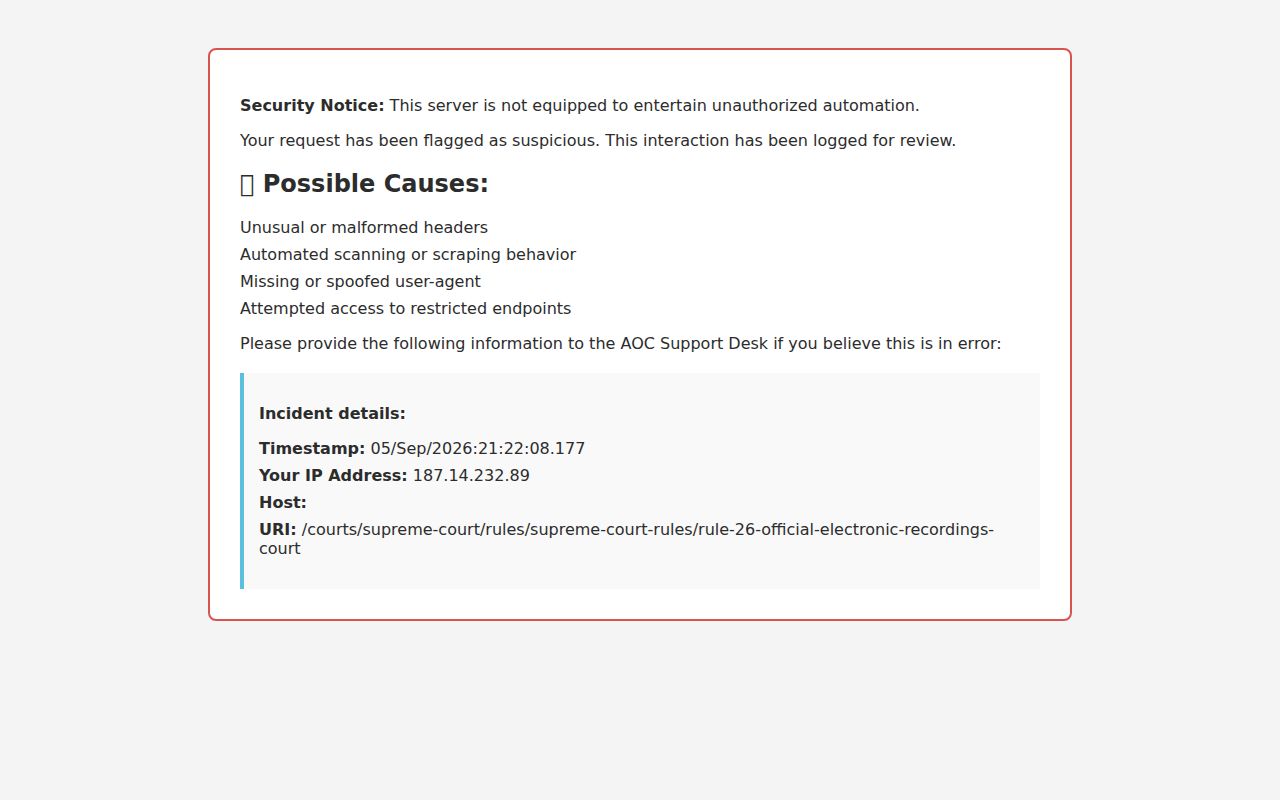
Transcripts don't travel the ordinary docket copy route. Under 28th District rules, litigants themselves must arrange the court reporter. Tennessee Supreme Court Rule 26 governs official electronic recordings instead. That official recording rule sets $50 for a simultaneous duplicate disc and $100 for a later duplicate, subject to its indigent-party provisions.
Before you commit to any channel, ask a question or three. The clerk or trial administrator can tell you whether a recording exists, whether a transcript was ever made, and which request path applies.
Public Access and Sealed Records
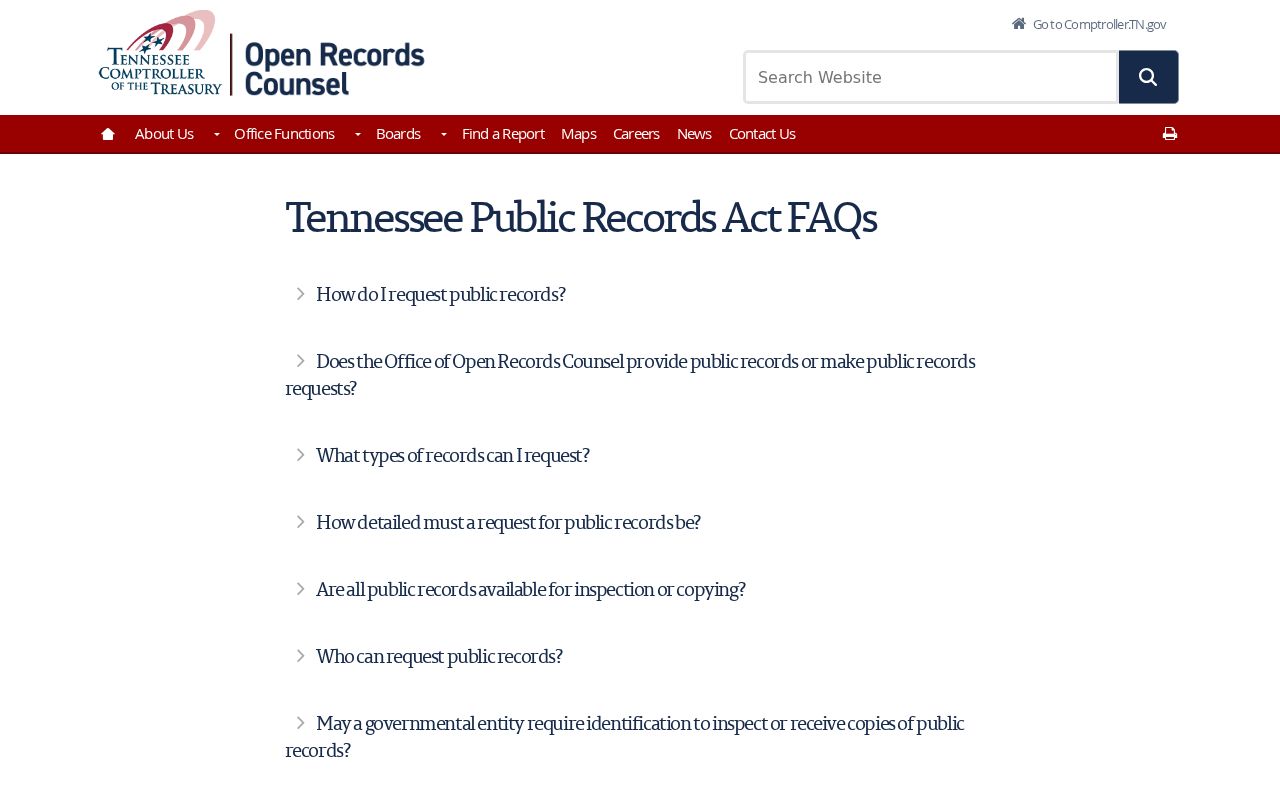
Tennessee Supreme Court Rule 34 opens court case records to inspection as a general rule. Still, it honors confidentiality created by statute, court order, protective order, or protected judicial work. Juvenile, adoption, dependency, termination, protected family, and expunged files can all be restricted. Personal identifiers and protected addresses may get redacted too. So a missing search result proves nothing. The case could be sealed, held by a different clerk, or unindexed. It might simply be absent from that interface. The Tennessee Public Records Act FAQ walks through citizen access, identification, and exemptions. It also explains how agencies must respond.
Go straight to the source with your questions. Ask the Gibson County clerk's office whether the file exists, which portions are open, and whether a redacted copy can be provided.
Key rules:
Tennessee Supreme Court Rule 34 starts from public access while preserving lawful limits.
Tennessee Code Annotated § 10-7-503 provides citizen inspection rights unless law says otherwise.
Tennessee Code Annotated § 10-7-504 supplies exemptions, with redaction used where lawful.
Older Gibson Court Records After 1941
Fire shaped what survives of old Gibson County court records. The Tennessee State Library and Archives documents a 1941 courthouse fire. It catalogs the material that made it through, including Chancery Court Minutes Book A, which runs from 1834 through 1847. A historical docket may sit bound on a shelf. It may sit on microfilm, in an archive, or be gone entirely. The county publishes no online historical index or retention schedule covering these series. When you contact the clerk, bring an approximate year. Bring the court, the names involved, and the type of record. Ask where the original series lives and whether any index survives. For a big request, get a written estimate up front; page and labor charges climb quickly.